


Why the Lomography Lomo MC-A is a Brilliant Bridge Between Old-School Film and Modern Shooters

Updated: Nov 10, 2025
Film cameras that feel both nostalgic and useful are rare. For years, most “new” film gear has leaned heavily on toy-grade plastic or faithful recreations that lack modern conveniences. Lomography’s new Lomo MC-A shakes that trend: it’s a thoughtfully designed, all-metal 35mm point-and-shoot with a properly engineered glass lens, modern power options, and control modes that satisfy both someone learning film and a seasoned shooter who wants to stay hands-on. If you shoot film, this camera deserves a place in the discussion — and maybe in your bag.
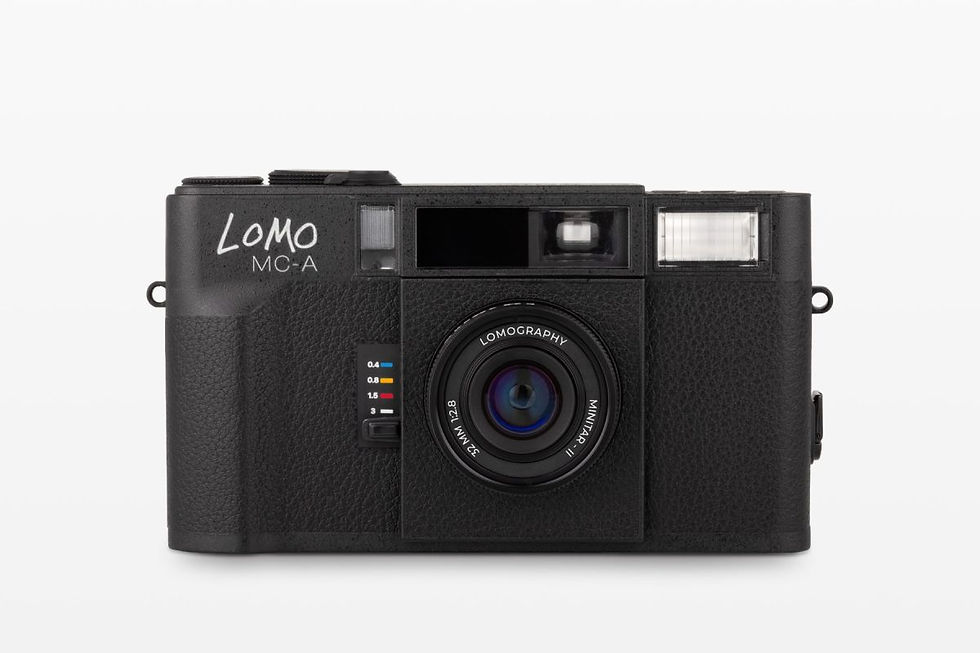
The Lomo MC-A | Solidly built — metal, honest, and reassuring
The MC-A doesn’t look or feel like a cheap plastic novelty. Lomography gave it a metal chassis, a compact rectangular silhouette, and tactile controls that recall premium compacts from the film heyday. That metal body isn’t just about looks: it makes the camera feel durable in everyday use and gives it a heft that communicates reliability when you’re shooting on the street or traveling. For many film shooters, build quality is the difference between a camera that becomes a reliable daily tool and one that ends up gathering dust — the MC-A lands squarely in the “tool” category.
A real lens: 32mm f/2.8 glass that actually matters
Lomography has outfitted the MC-A with a retractable 32mm f/2.8 multi-coated Lomo glass lens — a “normal” field of view that’s versatile for street work, environmental portraits, and everyday scenes. Unlike the cheap molded optics found in many novelty cameras, the MC-A’s multi-element glass design gives you crispness, contrast, and usable corner detail that make scanned negatives sing. That single lens choice is a smart compromise: wide enough for context, tight enough to isolate subjects at f/2.8, and friendly to composition without distortion. For photographers who want the look of film but with optical quality that actually rewards careful shooting, the lens is a big selling point.
Modern conveniences that don’t betray analog workflow
One of the most welcome features is the MC-A’s power solution: Lomography ships the camera with a rechargeable CR2 battery that charges via USB-C. That’s small, but it’s huge in daily life — no scavenging for specialty disposables in a pinch, no sticky battery drawer surprises. The battery is removable too, so if you’re off-grid you can still use a disposable CR2 as backup (must be a 3.7V). Add a clear LCD to read settings and you get a camera that respects film’s tactile pleasures while making the practical elements of shooting far less fiddly. For anyone migrating from digital or juggling both worlds, that balance is a draw.
A versatile set of exposure and focus controls
What makes the MC-A stand out for both new and experienced shooters is its control philosophy. It includes fully automatic exposure for casual point-and-shoot moments, aperture-priority mode for photographers who want creative depth-of-field control, and a full manual mode for those who want total agency over shutter and aperture. On the focusing side the camera offers fast autofocus for run-and-gun situations plus a manual zone-focus option that harks back to classic compact designs and speeds up street shooting. Toss in multiple-exposure capability, bulb mode, and exposure compensation, and you have a camera that’s at once playful and serious — perfect for experimenting without sacrificing craft.
Thoughtful extras — flash gels, Splitzer, and accessories
True to the Lomography spirit, the MC-A ships with “signature tools”: colored flash gels, a Splitzer lens attachment for creative multiple exposures, protective filters, a leather hand strap, and a protective wrap. Those inclusions aren’t gimmicks — they encourage experimentation and make creative outcomes accessible right out of the box. New film shooters often don’t know how to get started with creative techniques; giving them physical, safe ways to experiment makes the camera both a learning toy and a creative instrument. Meanwhile, seasoned shooters will appreciate having practical accessories bundled rather than hunting down compatible parts.
How the MC-A fits into modern film photography
There’s a growing segment of photographers who want analogue aesthetics but modern usability. The MC-A sits neatly between the stripped-down charm of plastic toy cameras and the expensive boutique reissues that replicate classic gear. For a lot of users, it’s the perfect daily film camera: compact enough for pockets, robust enough for travel, and flexible enough for deliberate work. Street photographers will love the 32mm normal focal length and quick zone focus; portrait shooters will find the f/2.8 aperture useful for subject separation; and documentarians will value the reliability of a metal body plus usable flash and sync options. In short, it’s a camera that supports multiple photographic approaches rather than forcing a single style.
Why this is exciting for old-school film shooters
For photographers who learned on rangefinders and SLRs, the MC-A offers many familiar affordances: manual exposure, bulb, tripod mount, PC-sync, and a physical film advance (yes, a lever — it’s still a film camera, after all). But it also removes some of the mundane headaches of classic cameras (battery scarcity, fragile plastics, absent information displays) so you can focus on composition and chemistry. That’s the rare combination: an analog experience that retains the emotional satisfaction of mechanical photography while being pragmatic about modern life. Experienced shooters get the control and the build; newcomers get a gentler entry point.
Why modern shooters (digital converts) will like it
If you’re coming from digital, the MC-A reads as friendly: aperture-priority for semi-automatic control, autofocus for fast capture, an LCD for immediate feedback, and USB-C power so you don’t have to learn the quirks of obsolete cell technology. The camera eases the learning curve by letting you lean on familiar workflows while still exposing you to film’s serendipity — unpredictable grain, color shifts, and handling of highlights. Many digital shooters want to dip into film without committing to a technical slog; the MC-A is a very marketable bridge device for that audience.
Room for hope: what this could mean for Lomography’s instant film line (Instax)
One of the most exciting implications of the MC-A is what it signals about Lomography’s engineering direction. A metal chassis, a quality multi-coated glass lens, reliable autofocus, LCD, and USB-C rechargeable batteries are features we’d love to see in Lomography’s instant cameras as well. Imagine an Instax-style body with a proper glass lens, a rechargeable power solution, and more robust exposure controls — instant photography would benefit enormously.
If the MC-A proves successful, there’s a clear product roadmap: pack the same practical engineering into instant formats and you’d have instant cameras that are not just fun but genuinely useful for pros and enthusiasts alike. That’s a future many of us would welcome.
Final thoughts — an optimistic step forward
Lomography’s Lomo MC-A is more than a nostalgic throwback. It’s evidence that analogue photography can evolve: well-engineered metal bodies, glass optics, modern power, and flexible control schemes make film accessible, reliable, and creatively rich. Whether you’re a dyed-in-the-silver-bath veteran or someone who wants to try film without fighting legacy quirks, the MC-A invites both curiosity and craft. And if the features it brings to 35mm make their way into instant formats, we could be looking at a renaissance where instant cameras become serious creative tools — not just party props. For that reason alone, the MC-A feels like a meaningful innovation in the current film revival.
My name is Jason Logan. I'm photographer from North Jersey and I run JMT Photography & Media. My hometown is Jersey City.
I'm an instant film junkie (Instax), former amateur boxer, martial artist, Dad, husband, and love to cook.


Comments